An-Najah National University, represented by its President, Prof. Maher Natsheh, signed a cooperation agreement with the Food and Agriculture Organization of the United Nations (FAO) to implement the project titled “Providing Training and Employment Opportunities in Green Jobs and Sustainable Income for Palestinian Youth in the Agri-Food Business Sector.” The project is carried out in partnership with four Palestinian universities — An-Najah National University, Al-Quds University, Hebron University, and Palestine Technical University–Kadoorie — and is funded by the Government of Denmark.
Prof. Natsheh emphasized the University’s commitment to preparing qualified professional leaders and developing human resources in all fields of life, particularly in the agricultural sector. He highlighted the University’s efforts to enhance students’ and graduates’ capacities to compete in the labor market locally and regionally, including in entrepreneurial fields within agriculture and the food industries. He called on students and graduates to participate in the project, gain experience, and build upon it to launch their own entrepreneurial ventures in this field, contributing to food security and the achievement of sustainable development goals.
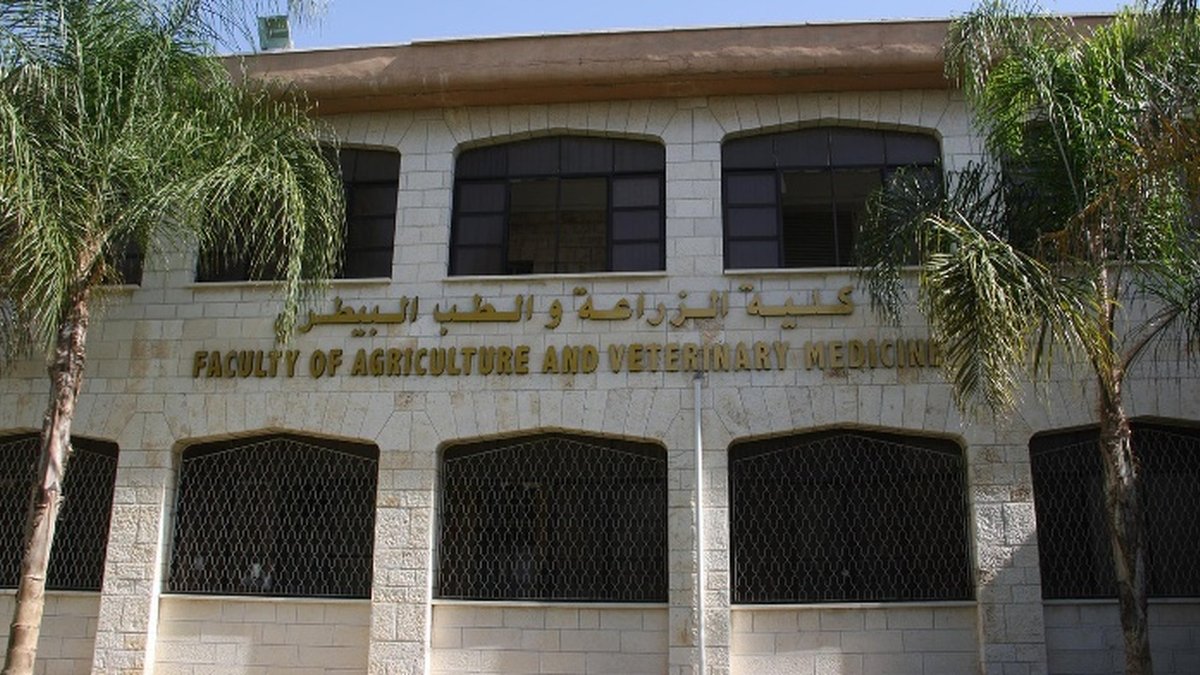
Dr. Hiba Fares, Project Coordinator and Dean of the Faculty of Agriculture and Veterinary Medicine at the University, explained that the project aims to attract Palestinian youth to the agri-food business sector, create sustainable job and income opportunities, promote and develop green enterprises and jobs, support sustainable development, address gender inequality, and stimulate local economic growth.
Regarding the implementation mechanism, Dr. Fares noted that the project will engage all relevant stakeholders through partnerships with NGOs, international organizations, UN agencies, private companies, governmental institutions, food and agriculture cooperatives, factories, food companies, packing houses, and Palestinian youth of both genders. The project will build their capacities and create sustainable employment and investment opportunities in the agri-food business sector.
It will offer a range of activities and services for young participants, helping them integrate into the labor market by selecting 100 young men and women from each university (400 in total), based on clear selection criteria ensuring that no less than 50% of participants are women. The project will enhance their skills through a comprehensive 14-day training program covering: employment opportunities in the agri-food sector, market research methods, business planning, and the development of financial and administrative strategies for entrepreneurial projects. Knowledge and skill packages in the agricultural field will be used to bridge skill gaps in the agri-food labor market and promote a transition toward environmental sustainability and development.
The project seeks to provide 62 participants with paid practical training for eight months (USD 350 per month). In addition, a number of green agricultural startup projects will be selected to develop concrete and achievable business plans, allowing them to apply to FAO for joint investment support of up to USD 20,000.
Dr. Fares also noted that the University will announce the dates and procedures for submitting applications for those wishing to benefit from the project — targeting students who will graduate in the current academic year or graduates from the past three years (2018–2020) from the same university and from all disciplines.
عدد القراءات: 275


