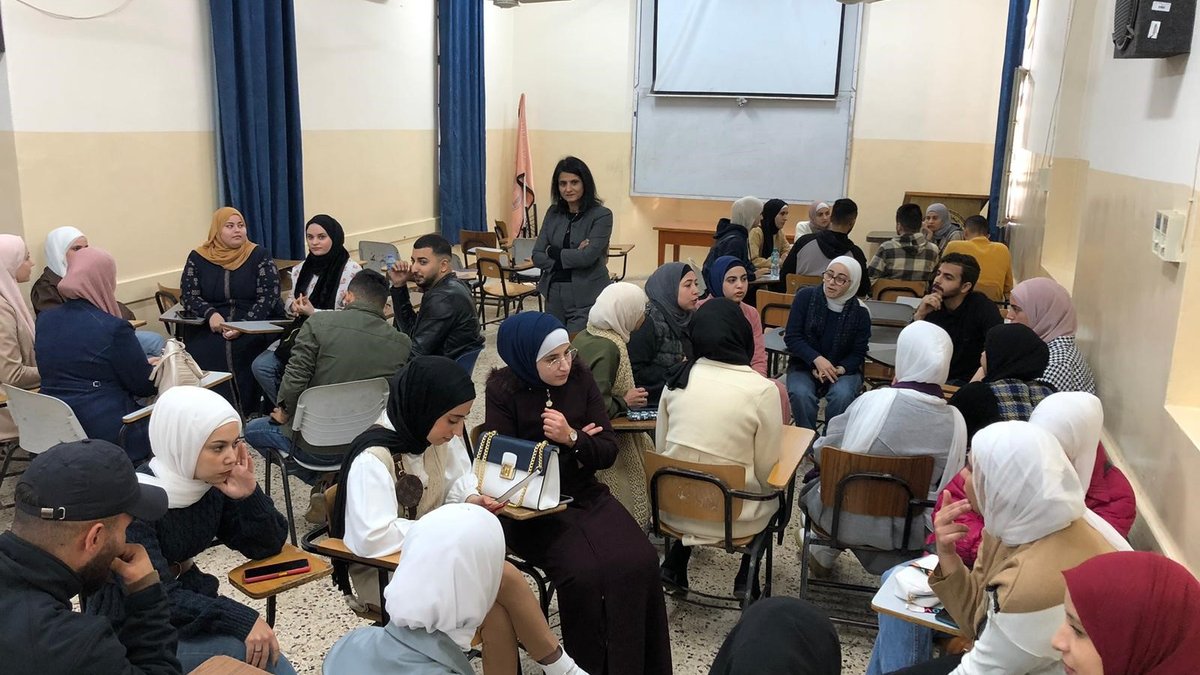
An-Najah National University, in partnership with the Food and Agriculture Organization of the United Nations (FAO), launched the third training course under the project “Green Jobs and Sustainable Income Opportunities for Palestinian Youth in the Agri-Food Sector”. The training took place from February 2 to March 9, 2024, with the participation of 47 young men and women selected from 173 applicants.
The project aims to empower university youth by strengthening their capacities in green agricultural entrepreneurship and encouraging their active participation in the agricultural labor market. It focuses on developing practical and technical skills essential for creating sustainable employment opportunities and promoting the establishment of innovative agri-food enterprises linked to agricultural value chains — with special attention to women’s and youth empowerment.
The 47 participants received specialized training based on the official training manual developed by FAO. The program covered several key themes, including entrepreneurship, agricultural value chains, design thinking, job market readiness, and financial and environmental feasibility analysis. The training was delivered by a distinguished team of trainers — Dr. Tawfiq Al-Qubaj, Dr. Ola Anabtawi, and Dr. Ahmad Za’zou’, under the supervision and coordination of Dr. Hiba Fares, the University’s Project Coordinator.

Participants were selected through a transparent and rigorous process to ensure fairness and equal opportunity, according to the following criteria:
- Age (20%): Applicants had to be under 29 years old; older candidates were deemed ineligible.
- Year of graduation (30%): Higher scores were given to graduates from 2020, with lower scores for students in their final semester.
- Interview performance and personal attributes (50%): Evaluation focused on motivation to work in the agri-food sector and relevant prior experience.
This project contributes to advancing the Sustainable Development Goals (SDGs) by promoting decent work opportunities for youth, encouraging green entrepreneurship, and empowering women, while supporting sustainable food production that protects the environment and reduces poverty and unemployment in rural communities.
عدد القراءات: 60


